

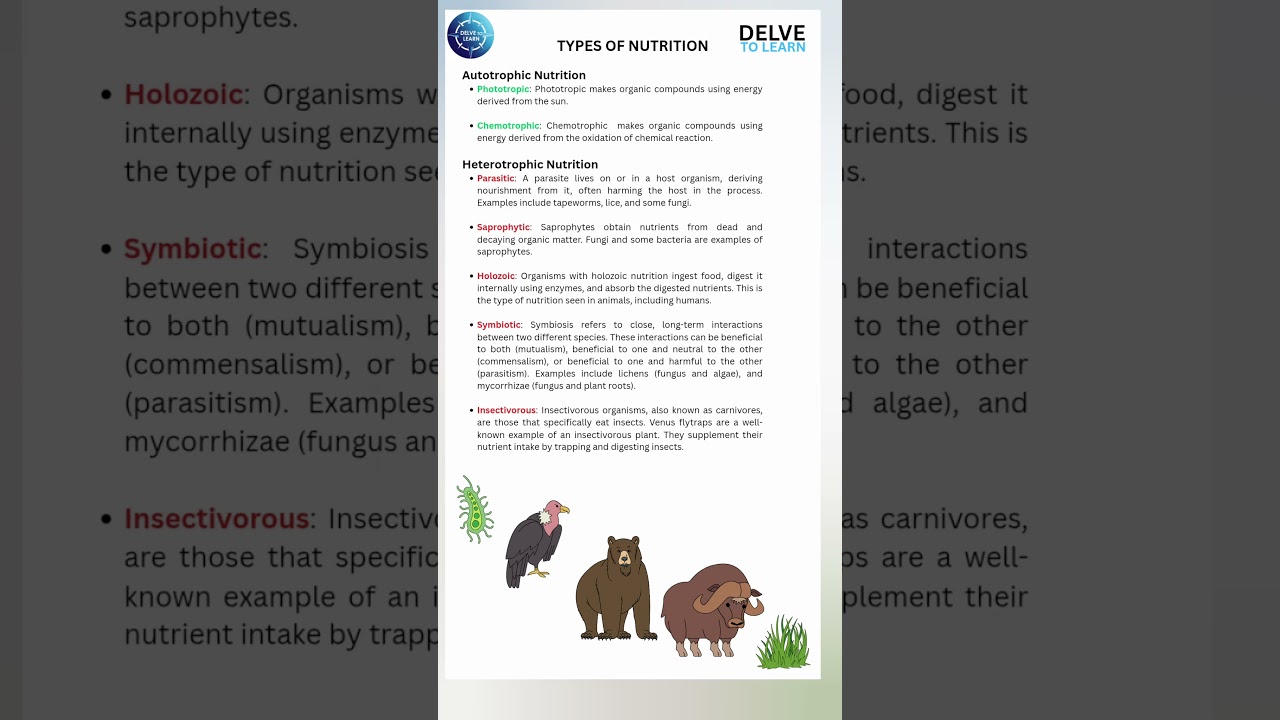
Forms of Vitamin

Autotrophic Vitamin
Phototropic: Phototropic makes natural compounds utilizing vitality derived from the solar.
Chemotrophic: Chemotrophic makes natural compounds utilizing vitality derived from the oxidation of chemical response.
Heterotrophic Vitamin
Parasitic: A parasite lives on or in a number organism, deriving nourishment from it, usually harming the host within the course of. Examples embrace tapeworms, lice, and a few fungi.
Saprophytic: Saprophytes receive vitamins from lifeless and decaying natural matter. Fungi and a few micro organism are examples of saprophytes.
Holozoic: Organisms with holozoic vitamin ingest meals, digest it internally utilizing enzymes, and soak up the digested vitamins. That is the kind of vitamin seen in animals, together with people.
Symbiotic: Symbiosis refers to shut, long-term interactions between two completely different species. These interactions will be helpful to each (mutualism), helpful to at least one and impartial to the opposite (commensalism), or helpful to at least one and dangerous to the opposite (parasitism). Examples embrace lichens (fungus and algae), and mycorrhizae (fungus and plant roots).
Insectivorous: Insectivorous organisms, also referred to as carnivores, are people who particularly eat bugs. Venus flytraps are a widely known instance of an insectivorous plant. They complement their nutrient consumption by trapping and digesting bugs.
#vitamin #autotrophic #heterotrophic #parasitic #saprophytic #holozoic #symbiotic #typesofnutrition #biology #class10science #lifeprocesses
source