

Revealed March 24, 2026 03:16AM
The Dietary Tips for Individuals—up to date each 5 years by legislation—function the nation’s blueprint for wholesome consuming. By now, you’ve in all probability seen the newly released and far‑debated MAHA‑influenced model of the Dietary Tips for Individuals (DGA).

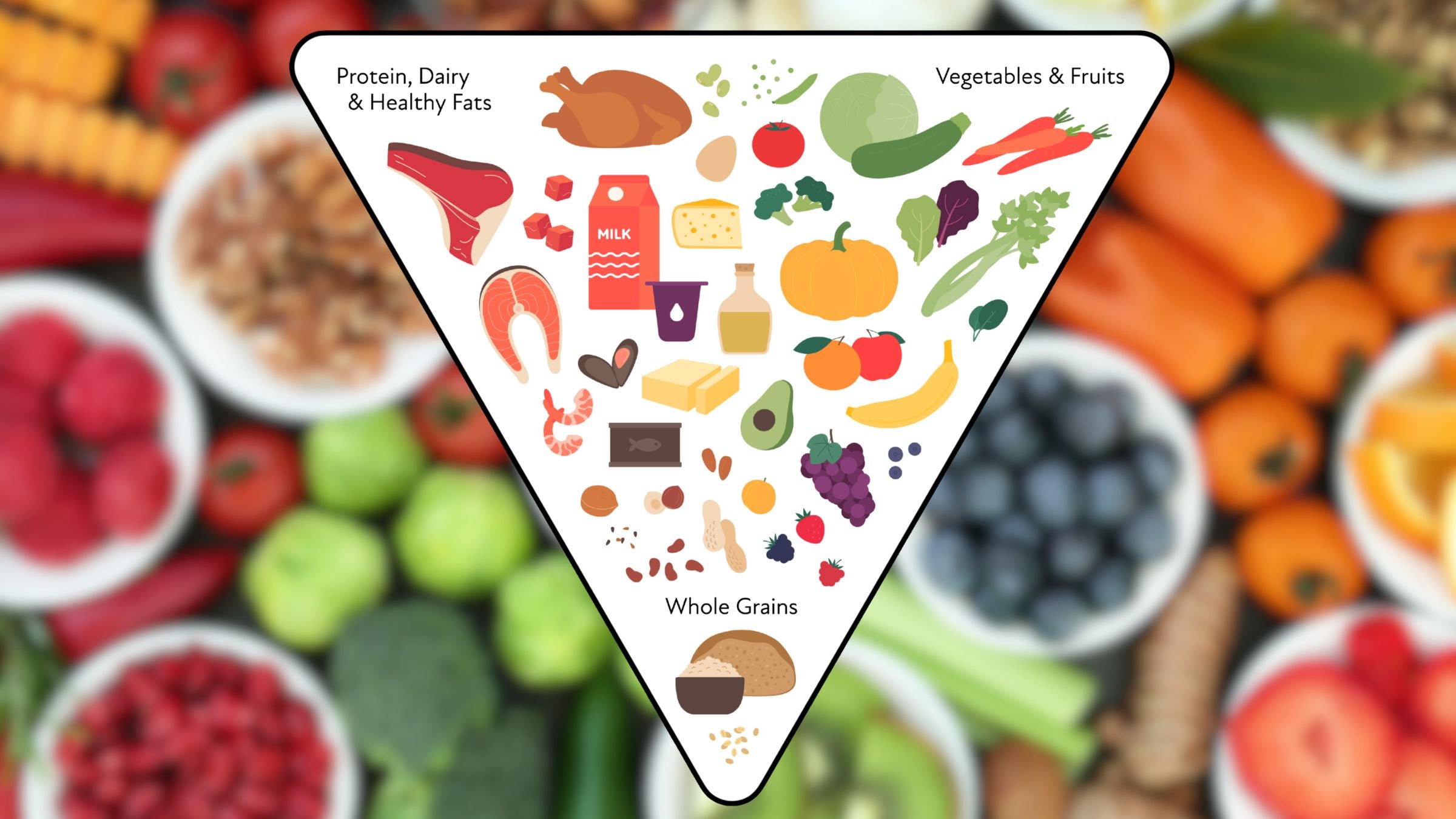
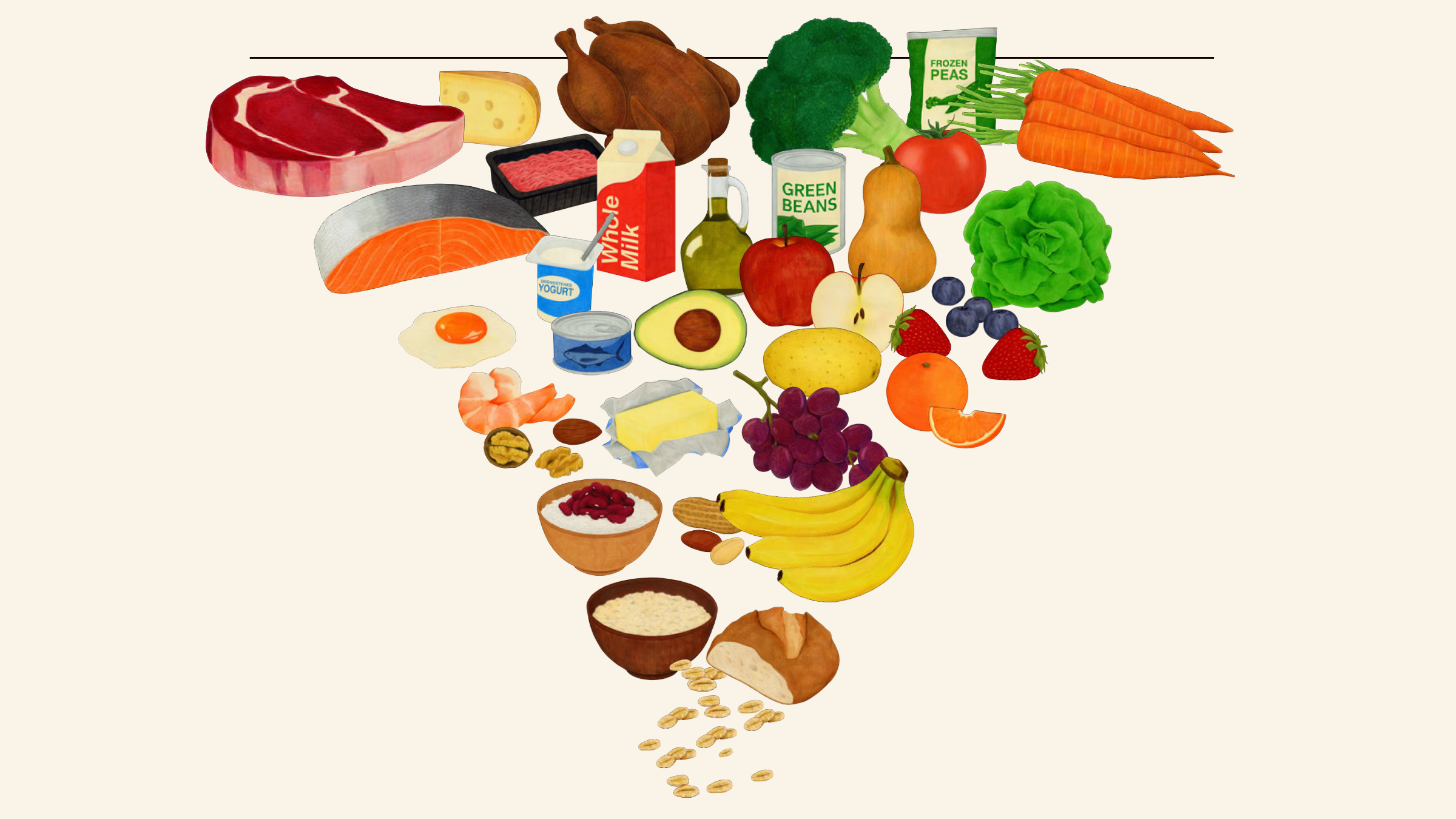
This newest version turns the traditional meals pyramid the other way up and rearranges its priorities: protein‑dense meals now sit on the high whereas carbohydrate‑wealthy grains are pushed to the underside. The streamlined tips increase protein targets, discourage heavily processed foods, and supply blended messages in the case of dietary fats.
That mentioned, for those who’re an athlete or fairly energetic, you is likely to be questioning what the brand new inverted meals pyramid means to your grocery cart. Ought to pasta actually lose floor to steak? As a registered dietician, I’ve some ideas. I spoke with a sports activities dietitian, and collectively we broke down the great, the regarding, and simply plain complicated facets of those controversial suggestions with athletes in thoughts.
The Good
Listed here are a number of the professionals of the newest dietary tips.
An Emphasis on Complete Meals
This time, the main target shifts towards consuming principally complete meals and getting again to the fundamentals—suppose actual strawberries as an alternative of berry‑flavored Cheerios. There’s no scarcity of causes for athletes to construct their diets round complete meals. As sports activities dietitian and former skilled triathlete Kim Schwabenbauer explains, “Complete meals, together with fruits, greens, complete grains, and lean proteins, present a fancy array of vitamins that assist coaching variations, restoration, intestine well being, and long-term efficiency.”
Few would dispute that one of many strongest parts of those suggestions is the decision to chop again on extremely processed meals—these extremely‑processed merchandise loaded with refined carbs, added sugars, extra sodium, and varied components. Following that steering alone might go a great distance towards really making America wholesome once more.
Nonetheless, Schwabenbauer factors out that endurance coaching locations distinctive metabolic calls for on the physique, and there’s a good, intentional place for processed carbohydrates. Throughout lengthy or intense exercises, quickly digestible gasoline—like gels, chews, sports activities drinks, or perhaps a bowl of white pasta after a grueling run—will be precisely what an athlete wants. “A complete‑meals‑based mostly food regimen paired with focused sports activities diet is usually the simplest method,” she explains.
Protein Constructive
On the high of the inverted pyramid sit the heavy hitters of the protein world—meals like steak, hen, and salmon. Their prime placement displays a renewed emphasis on boosting daily protein intake. Present suggestions now land at 1.2–1.6 grams per kilogram of physique weight, roughly double the earlier DGA steering and, frankly, much more aligned with what most endurance athletes really want.
“A rising physique of proof helps increased protein intakes for bodily energetic people, together with endurance athletes,” Schwabenbauer explains. “Increased protein consumption may help assist muscle upkeep, restoration, harm danger discount, metabolic well being, and satiety—notably in periods of excessive coaching quantity or power deficit.”
In sensible phrases, athletes stand to realize by making protein-rich meals—suppose hen, fish, tofu, and comparable choices—a constant a part of their meals and snacks.
Celebrating Fruits, Veggies, Dairy, and Some Sodium
On the high of the pyramid, with the protein heavyweights, are greens and fruits. That’s to be celebrated. “Rising fruit and vegetable consumption is a precedence for runners and the final inhabitants alike,” Schwabenbauer says. “These meals present important nutritional vitamins, minerals, antioxidants, fiber, hydration, and complicated carbohydrates that assist efficiency, recovery, immune operate, and bone well being.”
Think about the three servings of greens and two servings of fruit that the DGA suggests are the minimal a runner wants. As a dietician, I appreciated that the DGA calls out frozen, dried, and canned as being good choices—selections that may be handy, budget-friendly, and, sure, nutritious.
The newest iteration of the DGA continues to encourage dairy consumption—three servings a day—with a specific nod towards full‑fats choices like cheese and whole milk, so long as they’re freed from added sugars. In different phrases, possibly skip the fats‑free blueberry yogurt.
“Dairy merchandise present excessive‑high quality protein, calcium, vitamin D, and vitamin B12—vitamins which are notably helpful for runners,” Schwabenbauer says. She notes that for athletes with increased power wants, full‑fats dairy will be an environment friendly method to meet each calorie and nutrient calls for, so long as saturated fats stays inside really useful limits (beneath ten % of complete energy). And the fats in dairy can also assist hold starvation in verify. This can be a win for anybody who’s by no means been thrilled about skim milk.
The rules level out that “extremely energetic people might profit from increased sodium intake to offset sweat losses.” Most sports activities dietitians, together with Schwabenbauer, would agree, particularly if endurance actions last more than one hour and in sizzling or humid situations. So the final suggestion of consuming lower than 2,300 milligrams per day of sodium might not apply to many runners.
The Regarding
Regardless of the great, just a few issues are lacking from these tips.
The place Are the Carbs?
With protein taking heart stage and grains pushed decrease on the pyramid, Schwabenbauer warns that runners might fall wanting their elevated carbohydrate needs in the event that they comply with the DGA too rigidly.
“If runners persistently overemphasize protein or fats on the expense of carbohydrates, restoration and efficiency can endure,” she says. “Carbohydrates are the first gasoline supply for endurance train, and runners ought to actively prioritize them of their diets.”
Research shows many runners already under-consume carbs, with amateurs—who usually lack sports activities‑diet steering—being particularly liable to insufficient consumption.
The rules name for two–4 servings of complete grains per day, with changes based mostly on power expenditure. For athletes, which means deliberately including extra carb‑dense meals—like pasta, bread, and oatmeal—throughout heavy coaching blocks. Carbohydrate wants are extremely individualized and rely on coaching length, depth, and kind, and it’s practically unimaginable to fulfill these wants by way of vegatables and fruits alone.
It’s additionally nicely established that almost all Individuals fall quick on fiber, and prioritizing complete grains may help shut that hole. Nonetheless, there’s room in a runner’s food regimen for each excessive‑fiber, complicated carbohydrates and low‑fiber, refined choices. As a result of fiber slows digestion, it may possibly set off gastrointestinal (GI) misery if eaten too near or throughout train. Outdoors that coaching window, Schwabenbauer encourages runners to emphasise fiber‑wealthy, nutrient‑dense carbohydrate sources—fruits, greens, complete grains—to assist total well being.
No Love for Plant Proteins
The heavy emphasis on animal-based protein over plant-based choices doesn’t fairly align with present analysis on food regimen and lengthy‑time period well being. One global analysis of 101 nations, for instance, discovered that populations consuming extra plant‑derived proteins—suppose chickpeas, tofu, peas—are likely to have longer grownup life expectations. “I used to be stunned to not see extra emphasis on plant-based choices akin to lentils, legumes, tofu, tempeh, and edamame within the visible illustration of the rules,” Schwabenbauer says. You virtually need to squint to identify a plant-based protein in that pyramid.
Her broader message, although, is reassuring: Each plant‑ and animal‑based mostly proteins can match right into a nicely‑rounded food regimen for athletes and may totally assist their protein wants.
Boozey Suggestions
The up to date tips take a noticeably softer method to alcohol, providing the imprecise suggestion to “devour much less alcohol for higher total well being.” However for somebody already consuming closely, that recommendation lands about as successfully as telling an overtrained runner to “simply ease up a bit.” In actuality, athletes—and actually anybody—stand to learn from conserving alcohol consumption to a naked minimal.
“Analysis persistently exhibits that alcohol can negatively have an effect on athletic efficiency and restoration by impairing motor expertise, hydration standing, cardio efficiency, and muscle protein synthesis—even when protein consumption is sufficient,” explains Schwabenbauer. She provides that lengthy‑time period, increased alcohol use is linked to poorer physique‑composition administration, nutrient deficiencies, weakened immune operate, and a higher danger of harm.
The silver lining is that at this time’s non‑alcoholic beers are genuinely price elevating a glass to.
The Complicated
Regardless of what some headlines would possibly recommend, the brand new DGA doesn’t give anybody a inexperienced mild to load up on saturated fats. Sorry, carnivores.
Traditionally, the rules have suggested conserving saturated fats to about six to 10 % of complete energy, and the newest model nonetheless caps it at not more than ten %.
The complicated half is that most of the meals highlighted within the suggestions—steak, cheese, complete milk, butter, beef tallow—make it extraordinarily tough to remain beneath that restrict. They’re additionally calorie‑dense, which complicates power steadiness since fats incorporates twice the energy of protein or carbohydrate.
The rules add that “considerably limiting extremely processed meals will assist meet this objective,” however swapping processed seed oils for butter or beef tallow isn’t precisely a technique for decreasing saturated fats consumption. There stays robust scientific evidence that decreasing saturated fats and replacing a few of it with polyunsaturated fat—like these in fatty fish, nuts, and seeds—can meaningfully scale back coronary heart‑illness danger.
The DGA additionally advises selecting fat that present important fatty acids and cites olive oil for example. That’s the place the very fact‑checking will get shaky. “Whereas olive oil is a wonderful supply of monounsaturated fats and has nicely‑documented cardiovascular advantages, it’s not a major supply of important fatty acids,” Schwabenbauer notes. “Important fatty acids—omega‑6 and omega‑3—are discovered primarily in polyunsaturated fats sources, together with many seed oils, nuts, seeds, and fatty fish.”
Need extra Outdoors well being tales? Sign up for the Bodywork newsletter. When you’re able to change into a runner, be part of The Weekly 45 Challenge on MapMy. The objective is to log 45 minutes of operating or run-walking every week in March. That’s it. You can use these tips for guidance. Plus, you possibly can earn badges alongside the best way and even win some cool prizes.